CODING.WATERKANT
CAMP

WHERE AI, MACHINE LEARNING AND TECH ENTHUSIASTS COME TOGETHER TO BUILD THE FUTURE.

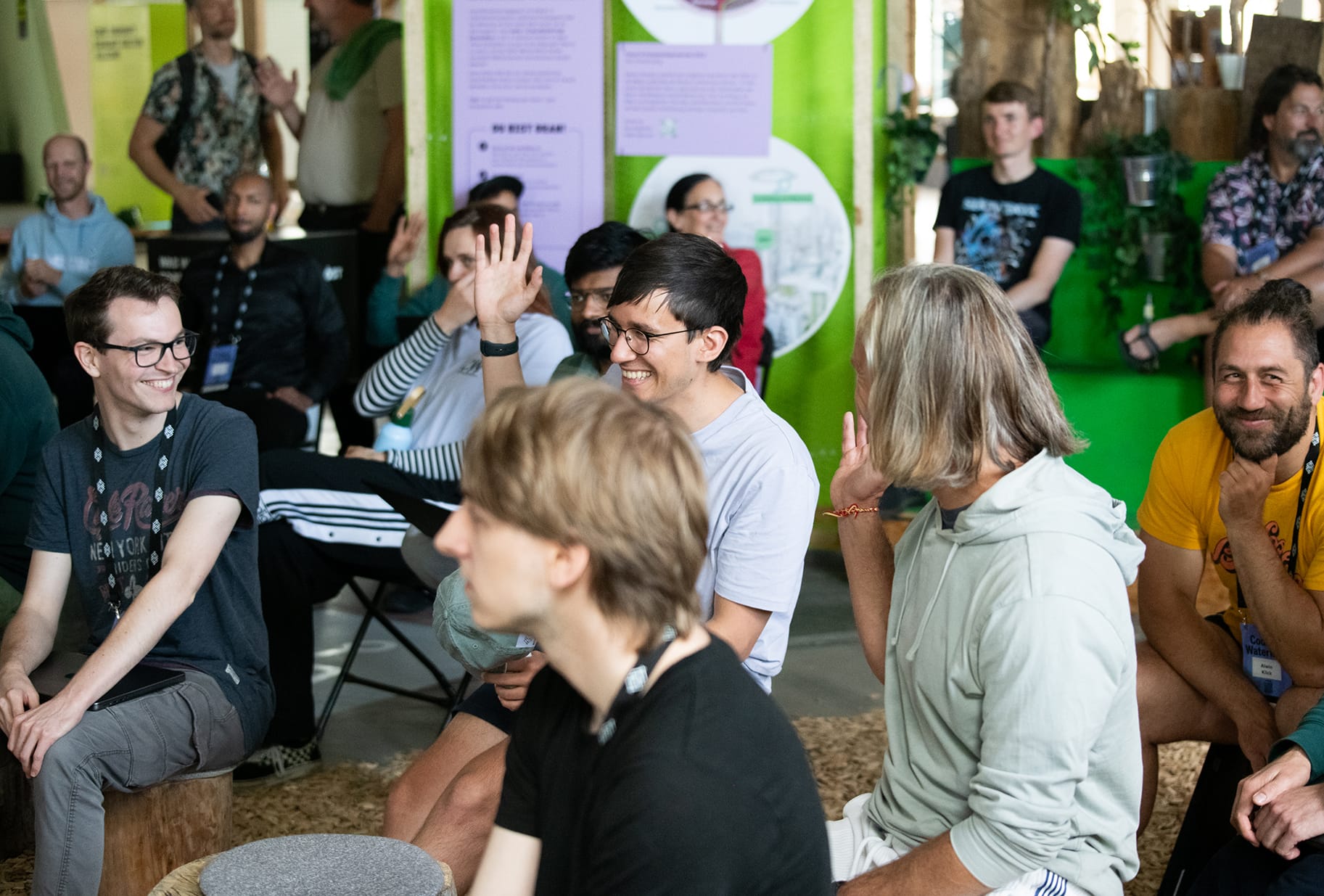
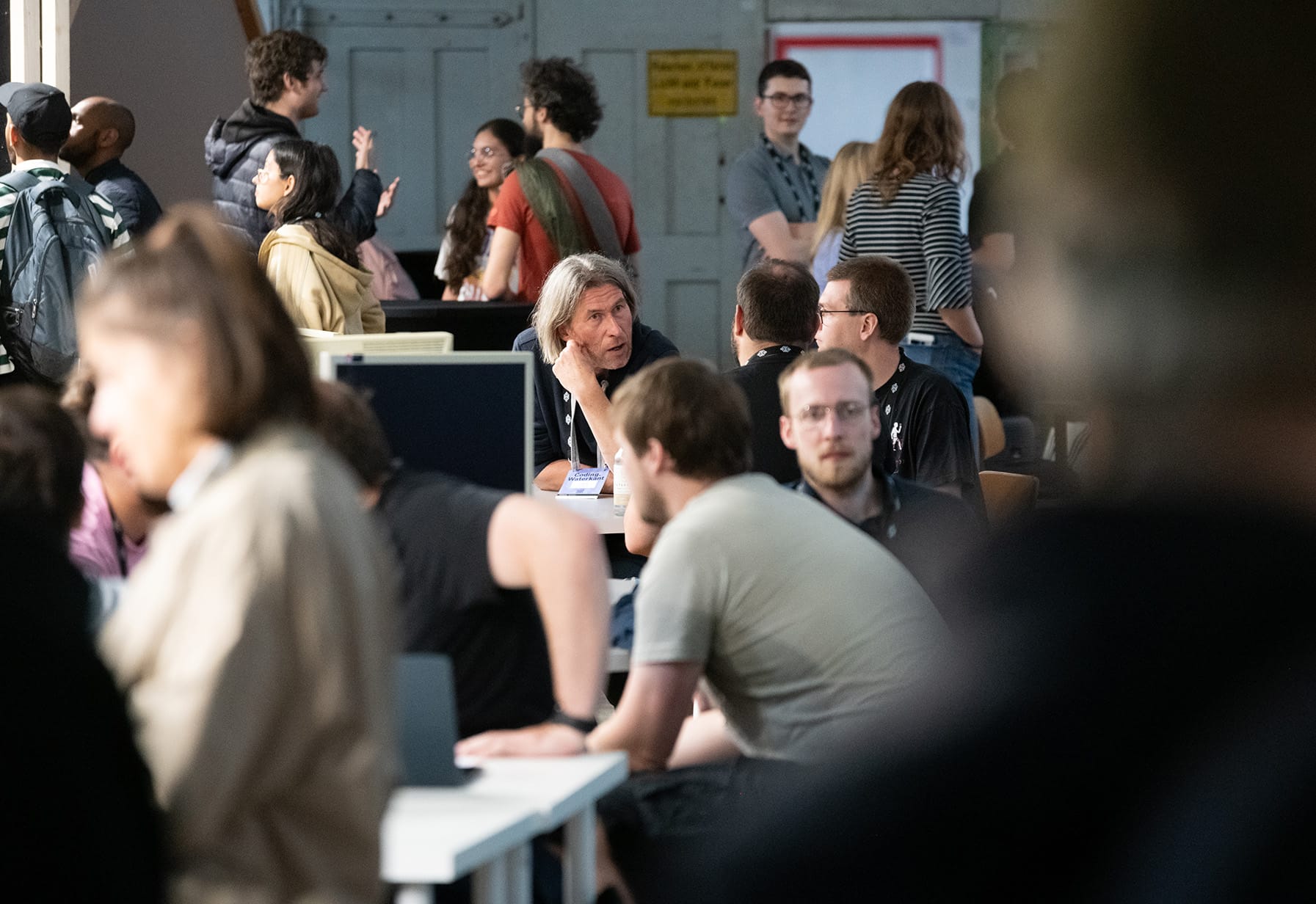
Coding.Waterkant Festival is a hands-on, community-driven tech camp that brings together developers, ML specialists, students, and professionals to collaborate, create, and learn.

Over several days, participants dive into coding projects, explore cutting-edge technologies, and exchange ideas in a collaborative, open environment by the Baltic Sea.

Whether you're part of a startup, a tech company, or an independent developer, you can work on your own project or join a team. The focus is on practical learning, real-world solutions, and fostering lasting collaborations.

  • Intensive coding on individual or collaborative projects
  • Hands-on workshops in Machine Learning, Open Source, and Robotics
  • Inspiration, exchange, and networking at eye level
  • On-site catering & accommodation to fully immerse yourself in the experience

PROGRAMM 2026

MONDAY

July 6, 2026
17:30Arrival & Registration of Guests
18:00Welcome with Patron Dirk Schroedter
18:20Keynote by Anita Schüttler // Federal Association Green Software // AI's hidden environmental impact - and a better way forward
18:50Keynote by Sven Großmann // Grafana Labs // Hacking Google, Watching Agents: The new realities of AI Security & Observability
19:15Get-Together with Food and Drinks

TUESDAY

July 7, 2026
08:00Breakfast
09:00Morning Welcome + Intro of Teams & Projects
09:45Free Floating and 2. Breakfast
10:15Deep Dive into Projects
13:00Lunch Break
14:00
18:00Dinner
19:00Sauna evening

WEDNESDAY

July 8, 2026
08:00Breakfast
09:00Morning Welcome
10:30
13:00Lunch Break
15:00
18:00Dinner
19:30Get Together @ Tiessenkai

THURSDAY

July 9, 2026
08:00Breakfast
09:00Morning Welcome
10:30
13:00Lunch Break
14:00
18:00Dinner
19:00Sauna evening

FRIDAY

July 10, 2026
08:00Breakfast
09:00Morning Welcome & Finalization of Projects
10:30Start of Project Presentations, Part I
12:30Lunch Break
13:30Start of Project Presentations, Part II
15:00Closing
MO TU WE TH FR

PARTICIPANT
PROJECTS 2026

OpenSource CustomAgent Builder

Henrik Horst - Wikimind

Applying Software Engineering Best Practices to AI Projects. Most AI Project are in a Demo state, we want to expand our capabilities into long-term qualtity ai software

Citizen Science and Gamification to Foster Data-Driven Sea Floor Exploration

Judith Fischer - GEOMAR

Marine scientists increasingly rely on underwater imagery to study and monitor the seafloor. However, creating reliable datasets for image matching remains a major challenge because underwater environments are highly dynamic, visually complex, and rarely provide accurate ground truth. Factors such as water turbidity, changing illumination, suspended particles, and repetitive textures make establishing correspondences between images difficult, limiting the development and evaluation of computer vision algorithms.

Our project aims to tackle this challenge by building a citizen science platform that leverages gamification to involve the public in scientific data annotation. Through an intuitive and engaging web interface, users are invited to identify matching features between pairs of underwater images. By turning annotation into an interactive experience, we enable large-scale collection of human-generated image correspondences while making marine science accessible to a broader audience.

The resulting annotations will be aggregated into a high-quality dataset of underwater image matches that can serve as valuable ground truth for research in computer vision, robotics, and autonomous underwater exploration. By combining human intelligence with modern data-driven methods, our platform helps bridge the gap between citizen participation and scientific discovery, ultimately contributing to more robust algorithms for mapping, monitoring, and exploring the ocean floor.

Therapy Tools Agent

Dr. Christian Wiesner - University of Kiel

Transforming Classic Paper-and-Pencil Tools into Progressive Web Apps. Psychotherapists use diverse collections of therapy tools, such as self-assessment questionnaires, behavioral protocols, and therapeutic exercises. However, many of these tools still exist as paper-based materials or static PDFs, making them difficult to access, adapt, and integrate into modern care workflows. Therapy Tools Agent converts classic paper-and-pencil tools into progressive web apps that are more accessible, interactive, and practical for everyday therapeutic use.

Fall Risk Assessment with AI

Christopher Hansen - University of Kiel

Can AI predict a person's age or identify an increased risk of falling from smartphone motion data alone? In this project, we use sensor data collected with the phyphox app to analyze how people walk, sit down, and stand up. Together, we will build and test machine learning models that could eventually help detect fall risks early and prevent injuries such as osteoporosis-related fractures. During the hackathon, we will collect fresh data from volunteers and rapidly prototype new ideas in a hands-on environment. Whether your background is AI, software development, data science, UX, healthcare, or you're simply curious to learn, there is plenty to contribute and explore.

more projects

coming soon

...

PDF Table Extraction & Multi-Extractor Fusion

Eike Schulz - ARIVA.DE AG

This project focuses on extracting and merging table data from PDF documents using multiple OCR and parsing frameworks. Since the results of the extraction processes often differ in format and structure and frequently contain errors, the project addresses the challenges of data normalization and quality improvement. It explores ideas for transforming (possibly invalid) LaTeX into Markdown, leveraging AI to normalize heterogeneous Markdown table structures, and interpreting and merging the extracted data through voting. The overall goal is to explore how AI can be used to reliably handle complex table structures, including suitable training data, machine learning strategies, and robust normalization approaches.

Context-Aware User Error Messaging

Karl Balzer - Byonoy GmbH |

Many applications fail in ways that are invisible or misleading to the people using them. This is especially true for software deployed directly at the end user—running on their device or in their local environment—where failures may originate in a third-party API, an external service, or a connected peripheral device, yet the user only sees a vague message like “something went wrong.” This project shall explore how runtime failures in such deployed applications can be translated into clear, human-oriented feedback that reflects the full context in which the application operates—not just the app itself, but the integrations and devices it depends on. The improved error analysis and messaging shall run offline as part of the deployed application itself, without relying on a network connection to interpret or explain what went wrong. The goal is to help end users understand what actually went wrong and what they can reasonably do next. By drawing on knowledge of the application together with documentation and behaviour of external APIs and peripheral hardware, the system aims to explain failures that may surface far from their true cause or repeat as familiar integration patterns. For the hackathon, the focus is on investigating whether richer contextual understanding—available locally at the point of failure—can turn cryptic runtime errors into meaningful, actionable user experiences rather than dead ends.

The Aesthetic Emotions Map – Mapping Visual Styles to Aesthetic Emotions

Björn Döge / Kiel Science Communication Network | Muthesius Kunsthochschule

Software Factory

Moritz Besser - envite consulting

EXIST Grant Expense Management

Christopher Ingwersen & Michel Wöhlk

This project aims to simplify the reimbursement process for the EXIST start-up grant by automating expense classification and application preparation. Users can upload invoices, and the system automatically extracts relevant information, identifies the appropriate expense category and cost item, and transfers the validated data into a complete reimbursement application. The underlying solution is designed to be transferable to other funding programs and administrative workflows, making it adaptable to a wide range of document processing and expense management use cases.

Predicting groundwater levels

Louisa Lagmöller & Felix Nickel

Groundwater levels vary throughout the year and depend on weather conditions. Although groundwater levels are routinely measured, we aim to predict future groundwater levels using publicly available data, such as weather observations and current groundwater measurements. In addition to forecasting groundwater levels, the proposed model provides insight into the most influential factors affecting groundwater level dynamics

FAQs

Accommodation can be provided in our glamping camp with fully equipped Sahara tents. Visit our Accommodation page for detailed information about what's included, facilities available, and a complete packing list of what to bring.

We've prepared detailed travel information including train, bus, bike, and car options to reach the festival site in Kiel. You can find comprehensive directions and transportation details on our Arrival Information page.

To add or modify your project proposal, please send an email to team@coding.waterkant.sh with your project details. Our team will review your submission and get back to you promptly.

You will be able to download the recognition certificate directly from our Educational Leave page very soon. The certificate is valid for Schleswig-Holstein and enables you to apply for paid educational leave for the main program days (July 6-10, 2026).

SEE FULL LIST

FAQ

OUR SPONSORS

Sponsor
Sponsor
Sponsor
Sponsor
Sponsor